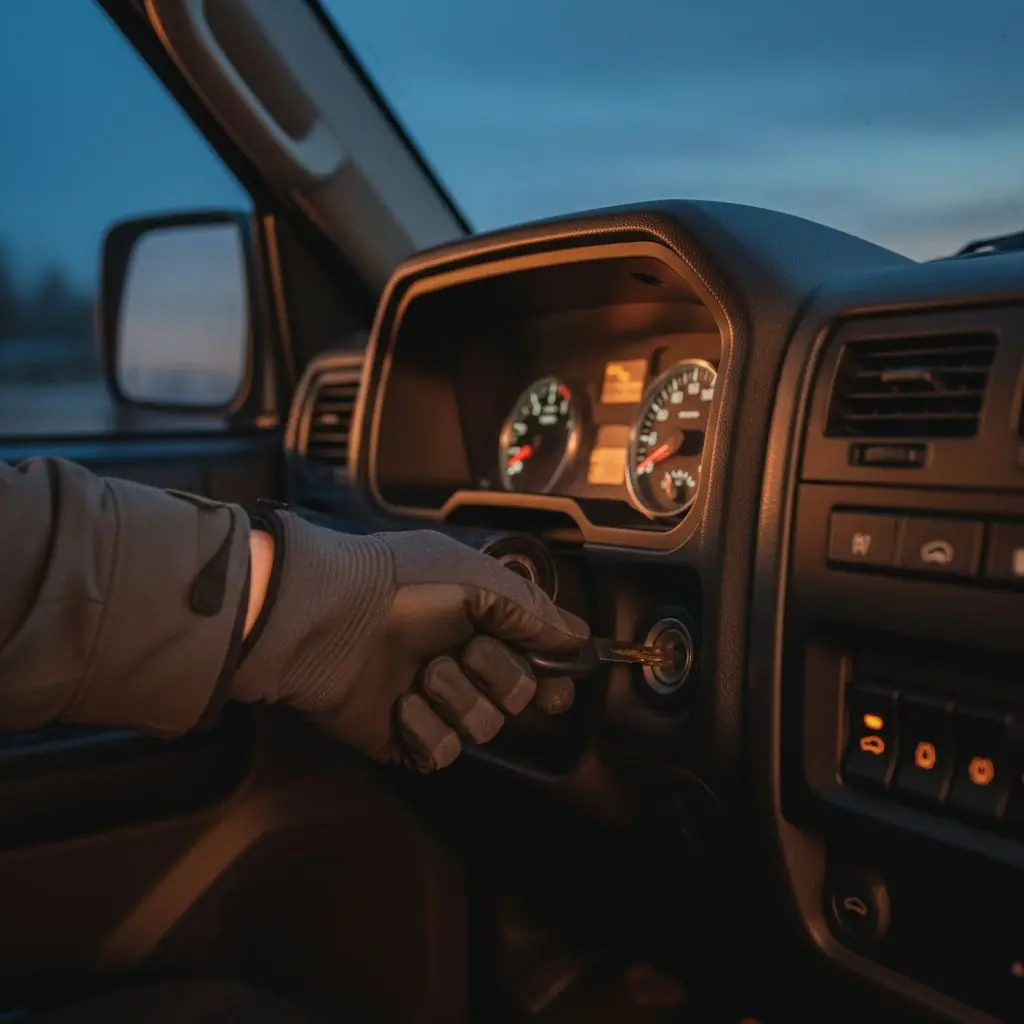
My Dodge, Chrysler, Jeep, or RAM Key Won't Turn. What Should I Do?
Tell us what's happening and we'll ask the right questions before recommending anything.
Tell us what's happening with your Dodge, Chrysler, Jeep, or RAM and we'll ask a few questions before recommending anything - year, model, whether a working key remains, and how the vehicle starts.
Older Mopar vehicles used traditional mechanical ignition systems, sometimes with separate door and ignition keys. Later models moved to FOBIK systems (an insert-and-turn fob with a chip that has to be programmed to the vehicle even though it operates like a mechanical key), and newer vehicles use additional electronic security layers. What applies to your vehicle depends heavily on the model year.
Worn cylinders are a known issue on many late-1990s and early-2000s Dodge, Chrysler, Jeep, and RAM vehicles, particularly work trucks and Jeeps that see heavy daily use.
The diamond-shaped remote key cases used across Charger, Challenger, and many Jeep and RAM trims wear at the buttons, blade, and housing seams over time - the housing can separate from repeated pocket or keyring use even when the internal chip is fine. If a key has snapped off inside the ignition, don't try to remove it yourself.
Charger, Challenger, and certain Jeep trims are commonly targeted for theft, so we may ask for additional ownership verification on those models before doing key or ignition work - not to slow you down, but because it's the responsible way to handle a vehicle in that category.
No. Tell us what's happening and we'll ask a few questions to narrow it down before recommending anything.
Not necessarily - the diamond-shaped fob housings on many Dodge, Jeep, and RAM models wear at the seams over time, separate from the ignition cylinder itself. We can often address the fob without touching the ignition.
We may ask for additional ownership verification on performance models that are commonly targeted for theft - this is standard practice, not a delay tactic.